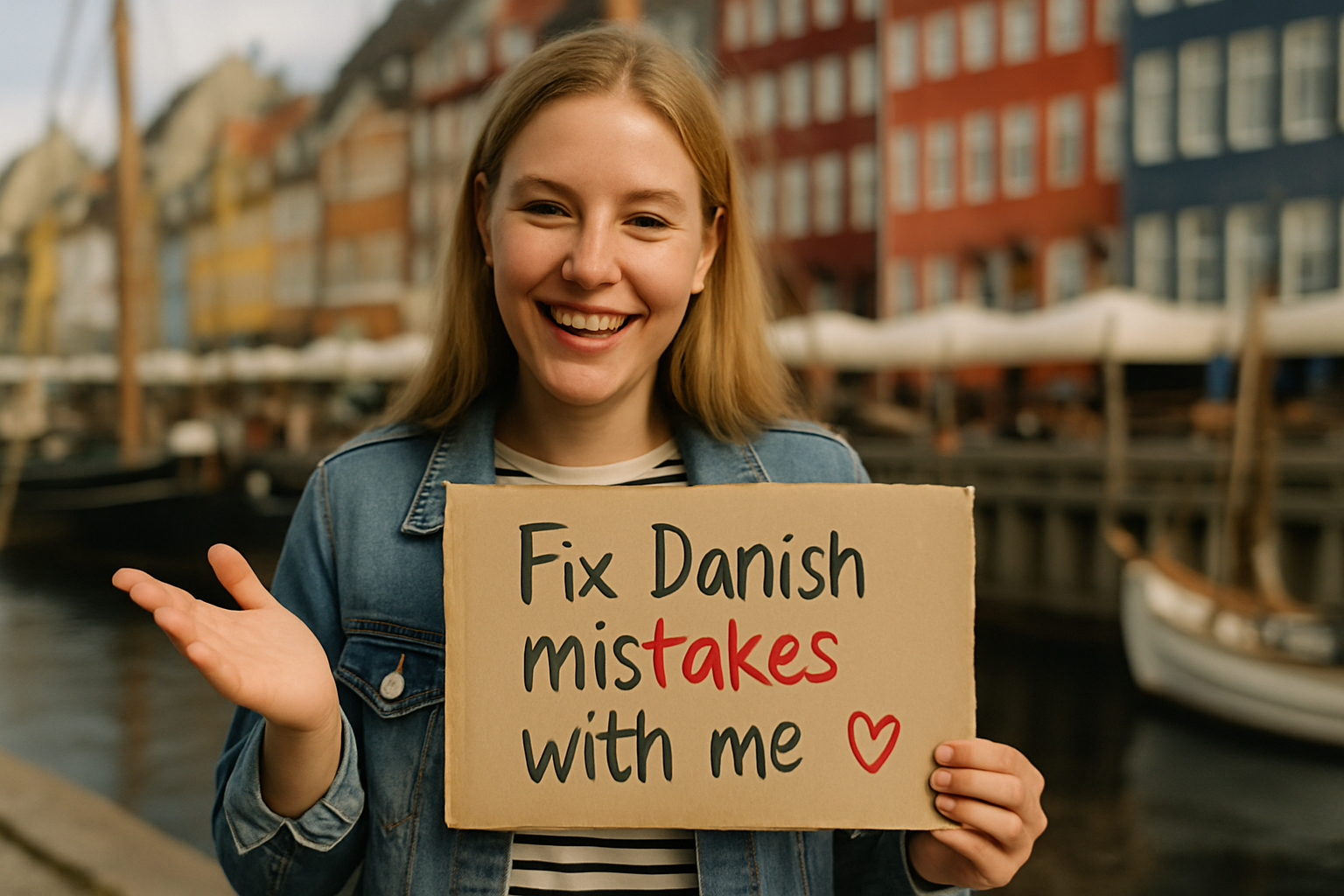
Learning Danish can be a rewarding experience, but beginners often stumble over common pitfalls that can hinder their progress. By identifying and correcting these mistakes early, you can improve your speaking skills and gain confidence. Here are the most frequent mistakes made by English-speaking beginners in Danish.
Common Pronunciation Traps
One of the biggest challenges for English speakers learning Danish is the pronunciation. The Danish language features sounds and intonations that may not exist in English, leading to misunderstandings. Here are a few key areas to focus on:
- Soft D Sound: The Danish letter "d" is often pronounced softly, similar to the English "th" in "this". For instance, the word dag (day) can sound more like "thay". Practice by repeating words like mad (food) and god (good) to master this soft sound.
- Stød: This is a glottal stop that can change the meaning of a word. For example, bøf (steak) versus bøf with stød (beef). While it may seem daunting, listening to native speakers and mimicking their intonation can help.
- Vowel Length: Danish vowels can be long or short, which affects meaning. For example, søn (son) versus søen (the lake). Pay attention to vowel length when practicing.
Word Order Woes
Danish word order can be tricky, especially since it differs from English. Here are some common errors:
- Inversion in Questions: In Danish, the verb typically comes before the subject in questions. For example, instead of saying "You are eating?" (Du spiser?), you should say "Spiser du?". Practice forming questions correctly to avoid confusion.
- Adverb Placement: Adverbs often come after the verb in Danish. Instead of saying "I often read books" (Jeg læser ofte bøger), remember to place the adverb after the verb: "Jeg læser bøger ofte".
Gender and Agreement Mistakes
Danish nouns have genders: common (en) and neuter (et). Incorrectly assigning gender can lead to confusion.
- Common Errors: Beginners often forget to match the article with the noun's gender. For example, it’s en hund (a dog) but et hus (a house). Make flashcards to memorize the gender of nouns as you learn them.
- Adjective Agreement: Adjectives must agree in gender and number with the nouns they describe. For example, it’s en stor bil (a big car) but et stort hus (a big house). Practice by creating sentences with different nouns and adjectives.
False Friends
False friends are words that look similar in English and Danish but have different meanings. Here are some examples:
- Aktiv: In Danish, aktiv means "active", not "active" in the sense of being engaged in an activity.
- Event: The word event in Danish refers to a "happening" or "incident", rather than a planned occasion like in English.
Be cautious with these words and always check their meanings in context.
Over-Translating from English
Many beginners make the mistake of translating directly from English to Danish, which can lead to awkward phrasing. For example:
- Direct Translation: Saying "I have 30 years" (Jeg har 30 år) instead of the correct expression "I am 30 years old" (Jeg er 30 år).
- Idiomatic Expressions: Avoid translating idioms directly. Instead of saying "It's raining cats and dogs" (Det regner katte og hunde), use the Danish equivalent "Det regner meget" (It rains a lot).
A Key Grammar Issue: The Definite Article
In Danish, the definite article is often attached to the noun as a suffix, which can be confusing for beginners. For example:
- hund (dog) becomes hunden (the dog).
- hus (house) becomes huset (the house).
Understanding this structure is crucial for forming correct sentences. Practice by taking a list of nouns and converting them into their definite forms.
Common Mistake: How to Practice
To avoid these common mistakes, consider the following strategies:
- Listen and Repeat: Use language apps or online resources to listen to native speakers. Mimic their pronunciation and intonation.
- Practice Speaking: Engage in conversations with fellow learners or language partners. This will help reinforce correct word order and gender usage.
- Flashcards for Vocabulary: Create flashcards for vocabulary, including gender and definite articles. Regular review will help solidify your understanding.
- Record Yourself: Listening to your own pronunciation can help you identify areas for improvement.
By focusing on these common beginner mistakes, you can build a solid foundation in Danish. Remember, practice makes perfect, and the more you engage with the language, the more confident you will become.
At Lingden, we provide real sentences, word audio, and IPA pronunciation to help you master Danish effectively. Start your journey today!