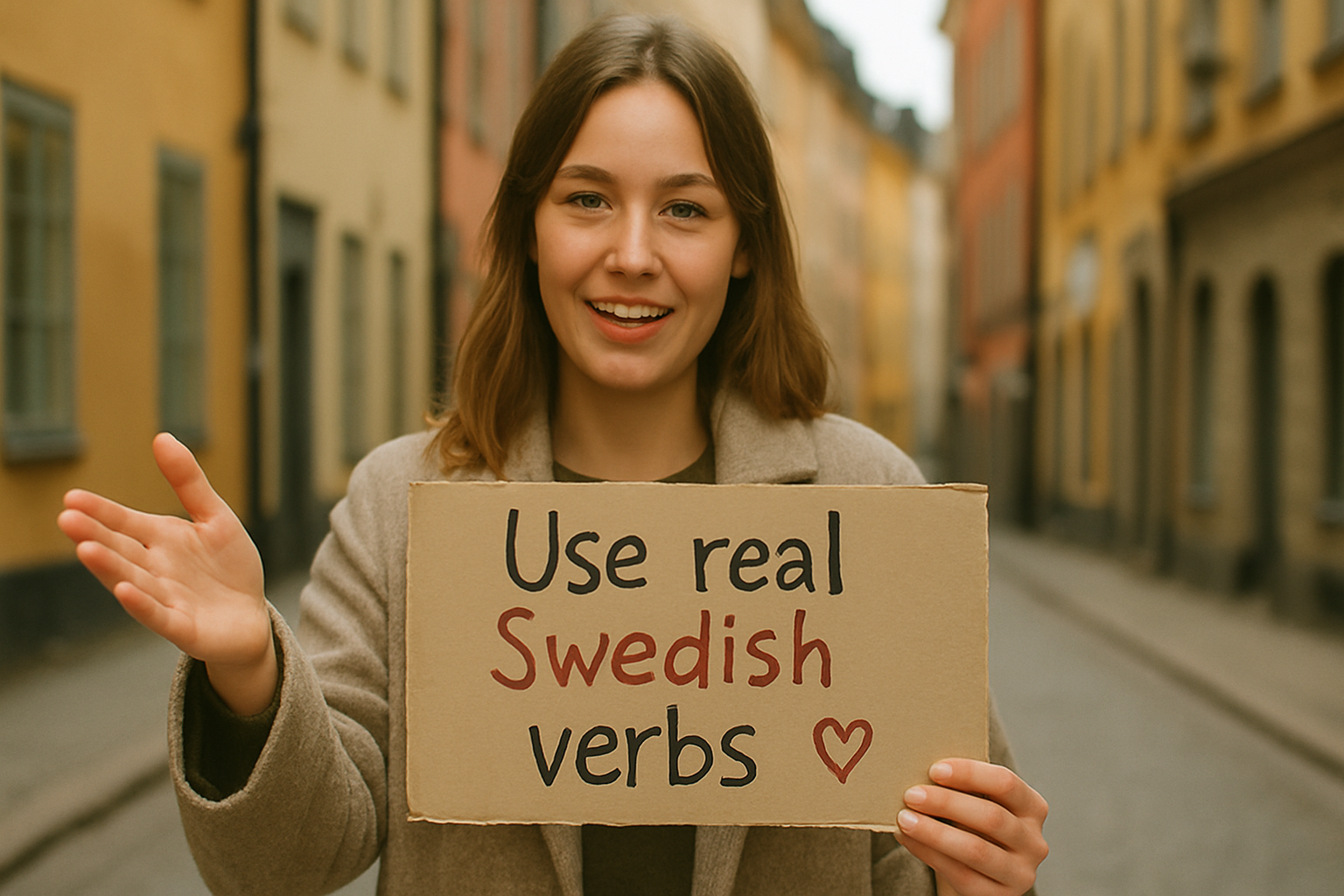
Learning a new language can be daunting, especially when it comes to verbs. In Swedish, certain verbs are essential for forming basic sentences and communicating effectively. This article will introduce you to the first 12 verbs that every beginner should learn. Mastering these verbs will help you unlock real conversations in Swedish.
The Essential Verbs
Here are the 12 essential Swedish verbs that you should focus on:
- Att vara (to be)
- Att ha (to have)
- Att gå (to go)
- Att vilja (to want)
- Att behöva (to need)
- Att gilla (to like)
- Att prata (to speak)
- Att lära (to learn)
- Att äta (to eat)
- Att dricka (to drink)
- Att bo (to live)
- Att göra (to do/make)
These verbs are not just vocabulary; they are the building blocks of communication. Let’s explore each verb with examples to help you understand how to use them in sentences.
1. Att vara (to be)
This verb is fundamental in Swedish. It is used to describe states, identities, and conditions.
- Example: Jag är glad. (I am happy.)
- Example: Du är lärare. (You are a teacher.)
2. Att ha (to have)
This verb indicates possession. It’s essential for expressing what you own or have.
- Example: Jag har en bok. (I have a book.)
- Example: Vi har ett hus. (We have a house.)
3. Att gå (to go)
Use this verb to talk about movement or travel.
- Example: Jag går till skolan. (I go to school.)
- Example: Hon går hem. (She goes home.)
4. Att vilja (to want)
This verb expresses desire and is useful for making requests.
- Example: Jag vill ha kaffe. (I want coffee.)
- Example: Vi vill åka till Sverige. (We want to go to Sweden.)
5. Att behöva (to need)
Use this verb to express necessity.
- Example: Jag behöver hjälp. (I need help.)
- Example: Du behöver en ny mobil. (You need a new phone.)
6. Att gilla (to like)
This verb is great for expressing preferences.
- Example: Jag gillar att läsa. (I like to read.)
- Example: Vi gillar svensk mat. (We like Swedish food.)
7. Att prata (to speak)
Use this verb to talk about communication.
- Example: Jag pratar engelska. (I speak English.)
- Example: Hon pratar svenska. (She speaks Swedish.)
8. Att lära (to learn)
This verb is essential for expressing the act of acquiring knowledge.
- Example: Jag lär mig svenska. (I learn Swedish.)
- Example: De lär sig om historia. (They learn about history.)
9. Att äta (to eat)
Use this verb when discussing meals and food.
- Example: Jag äter frukost. (I eat breakfast.)
- Example: Vi äter middag tillsammans. (We eat dinner together.)
10. Att dricka (to drink)
This verb is used for beverages.
- Example: Jag dricker vatten. (I drink water.)
- Example: Hon dricker kaffe. (She drinks coffee.)
11. Att bo (to live)
This verb describes where someone resides.
- Example: Jag bor i Stockholm. (I live in Stockholm.)
- Example: De bor i en lägenhet. (They live in an apartment.)
12. Att göra (to do/make)
This versatile verb is used for actions and tasks.
- Example: Jag gör läxan. (I do the homework.)
- Example: Vad gör du? (What are you doing?)
How to Practice These Verbs
To effectively learn these verbs, practice is essential. Here are some strategies:
- Flashcards: Create flashcards with the verb on one side and the English translation on the other. Include example sentences.
- Daily Sentences: Write a sentence each day using one of the verbs. This will help reinforce your learning.
- Speaking Practice: Try to use these verbs in conversations with a language partner or tutor. Speaking is one of the best ways to solidify your knowledge.
Common Mistake
One common mistake is confusing the verbs att vara and att ha. Remember:
- Att vara is used for states and identities.
- Att ha is used for possession.
Conclusion
Mastering these 12 essential Swedish verbs will provide you with a solid foundation for building sentences and engaging in conversations. Remember, practice makes perfect. With Lingden, you can enhance your learning with audio pronunciations and real sentences that incorporate these verbs. Start your journey to speaking Swedish today!