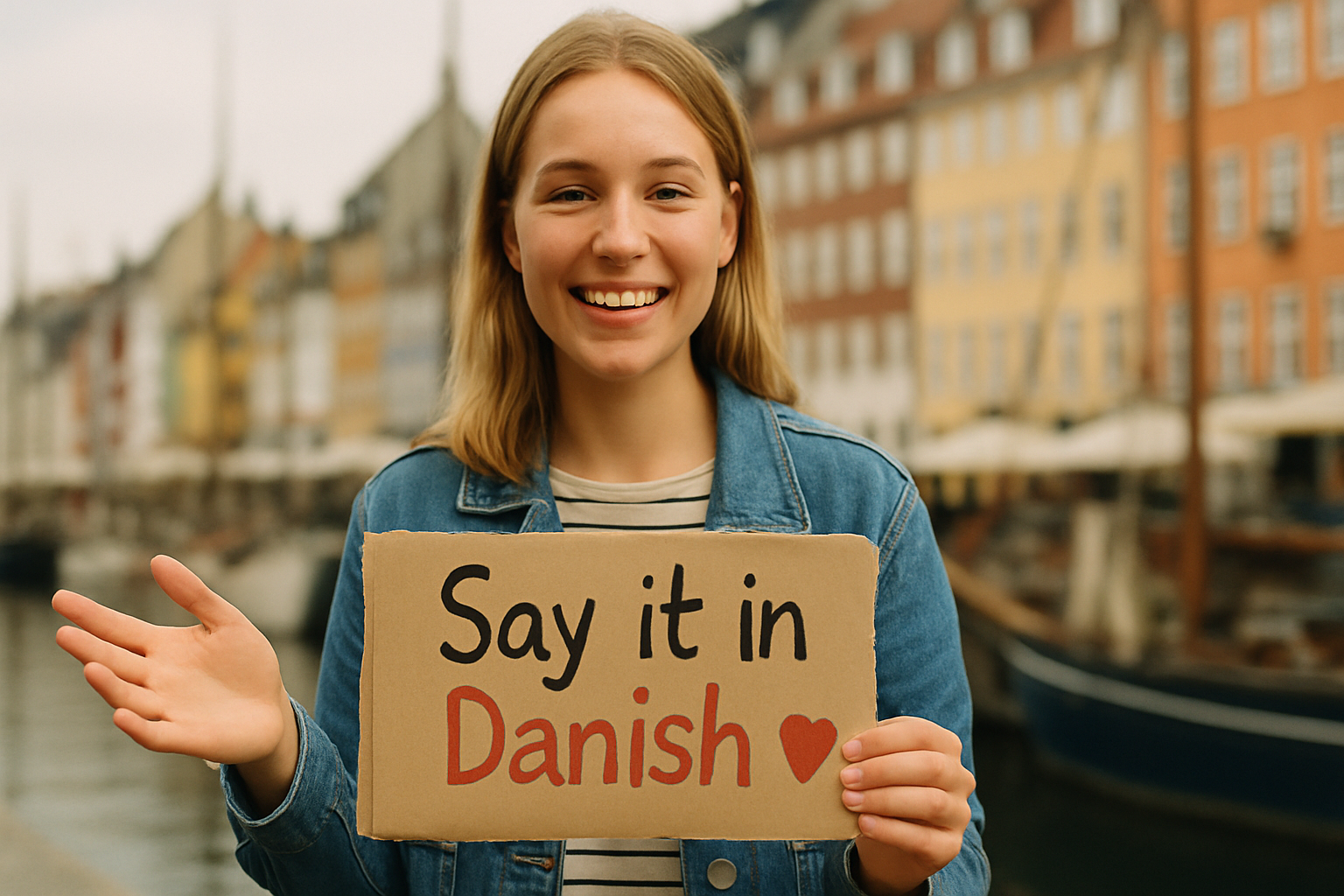
Learning Danish can be an exciting journey, especially when you can start using real phrases right away. This article provides practical phrases for everyday situations, helping you communicate effectively from the very beginning. Whether you’re greeting someone, ordering coffee, or asking for help, these phrases will boost your confidence in speaking Danish.
Essential Danish Phrases
Here’s a compact table of useful Danish phrases that you can start using immediately:
| Danish Phrase | Usage Note | |-------------------------|----------------------------------------------| | Hej | A casual way to say "Hello." | | Godmorgen | Use this to say "Good morning." | | Hvordan har du det?| Means "How are you?" | | Mit navn er... | Use this to introduce yourself, "My name is..." | | Jeg vil gerne have...| This means "I would like..." for ordering. | | Kan du hjælpe mig? | Use this to ask "Can you help me?" | | Jeg forstår ikke. | Say this when you don’t understand something.| | Kan du gentage det? | Means "Can you repeat that?" | | Tak | A simple way to say "Thank you." | | Undskyld | Use this to say "Excuse me" or "Sorry." | | Hvor er... | Means "Where is...?" for asking directions. | | Jeg er fra... | Say this to indicate where you are from. |
Understanding the Phrases
- Hej: This is the most common greeting in Danish. It's informal and can be used in nearly any situation, whether you are meeting friends or casual acquaintances. It’s similar to saying "Hi" in English.
- Godmorgen: Use this phrase in the morning to greet someone. It’s a polite way to start a conversation and shows you are friendly and respectful.
- Hvordan har du det?: This phrase is essential for small talk. It means "How are you?" and is a great way to show interest in someone else's well-being. You can respond with "Jeg har det godt" (I am good) or "Ikke så godt" (Not so good) depending on how you feel.
- Mit navn er...: When introducing yourself, this phrase is invaluable. Just fill in your name after "Mit navn er" to let others know who you are. For example, "Mit navn er Anna" means "My name is Anna."
Ordering Coffee and Food
One of the most practical situations you’ll encounter is ordering food or drinks. When you want to order coffee, use the phrase Jeg vil gerne have.... For instance, if you want a coffee, you can say, "Jeg vil gerne have en kaffe" (I would like a coffee). This phrase is versatile and can be used for ordering anything by simply changing the item you want.
Asking for Help
If you find yourself needing assistance, the phrase Kan du hjælpe mig? is your go-to. It means "Can you help me?" and can be used in various scenarios, from getting directions to asking for help with a language barrier. You might also hear the response, "Ja, selvfølgelig!" (Yes, of course!) when someone is willing to assist you.
Clarifying Understanding
When learning a new language, it’s common to encounter situations where you don’t understand something. In these cases, saying Jeg forstår ikke. (I don’t understand) is perfectly acceptable. If you need someone to repeat what they said, you can use Kan du gentage det? (Can you repeat that?). Both phrases are essential for clear communication and ensuring you grasp the conversation.
Politeness and Travel
Politeness is key in any language. Use Tak (Thank you) and Undskyld (Excuse me/Sorry) frequently to show respect and gratitude. These phrases will help you navigate social situations more smoothly. Additionally, when traveling, Hvor er... (Where is...?) will be invaluable for asking directions to places like restaurants or landmarks. For example, you might say, "Hvor er nærmeste restaurant?" (Where is the nearest restaurant?).
Common Mistake
A common mistake beginners make is overthinking pronunciation and grammar. While it’s important to strive for accuracy, remember that native speakers appreciate your effort to communicate in their language. Focus on getting the phrases out, even if your pronunciation isn't perfect. The more you practice speaking, the more comfortable you will become.
How to Practice
To effectively practice these phrases, try to use them in real-life situations. You can start by greeting friends or family in Danish, ordering coffee at a café, or even practicing with language exchange partners. Listening to Danish audio resources can also help you get accustomed to the rhythm and pronunciation of the language. Additionally, using apps like Lingden can provide you with audio examples, real sentences, and IPA pronunciation to enhance your learning experience.
Conclusion
Danish is a beautiful language, and with these practical phrases, you can start speaking right away. Each phrase opens a door to new conversations and connections. Remember, the key to mastering any language is practice and patience. With tools like Lingden, you can explore more phrases, hear their pronunciation, and build your confidence in speaking Danish. Start using these phrases today, and watch your language skills grow!