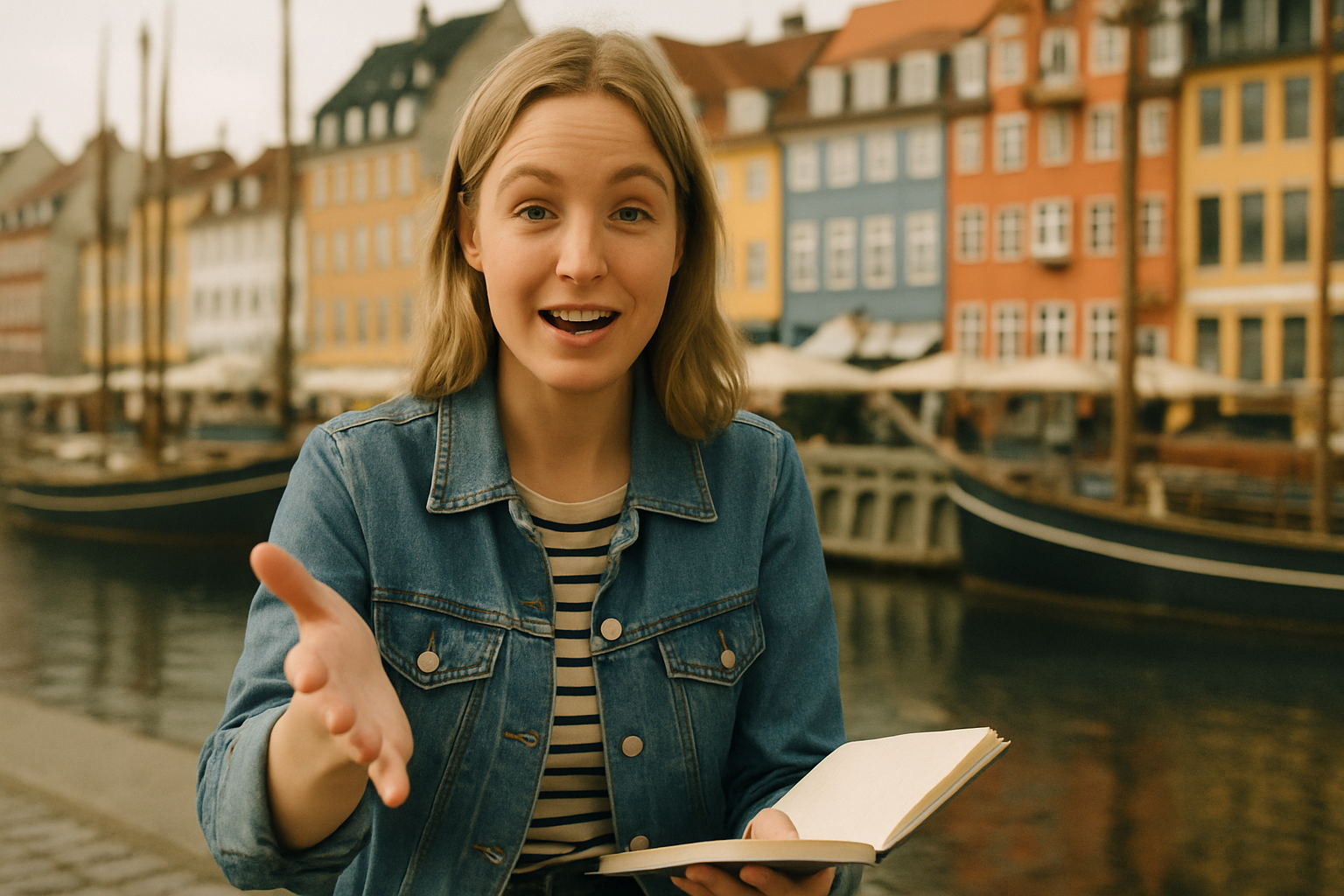
Is Danish hard to learn? For English speakers, Danish presents both challenges and advantages. While its pronunciation and some grammatical nuances might seem daunting at first, the language also offers many similarities to English, making it more approachable than you might think.
Familiar Vocabulary with Danish Cognates
One of the easiest aspects of learning Danish is the vocabulary. Danish, like English, is a Germanic language, which means they share many cognates. Words like telefon (telephone), eksamen (exam), and restaurant (restaurant) are almost identical to their English counterparts. This familiarity can fast-track your vocabulary acquisition and boost your confidence early on. For instance, when you encounter a Danish sentence like "Jeg har en computer" (I have a computer), you immediately recognize the word "computer," which helps you understand and remember the sentence structure.
Moreover, many Danish words are similar to English due to shared roots. For example, "familie" means "family," and "universitet" translates to "university." This overlap in vocabulary allows learners to quickly pick up new words without feeling overwhelmed. However, be cautious of false friends—words that look similar but have different meanings. For example, "eventuel" in Danish means "possible," not "eventual."
Simplified Grammar: A Learner's Friend
Danish grammar is relatively straightforward, especially compared to other languages. There are no cases to worry about, and verbs do not conjugate according to the subject. For example, the verb at være (to be) remains er for all subjects: "Jeg er" (I am), "du er" (you are), "han er" (he is). This consistency simplifies sentence construction and reduces the cognitive load on beginners.
Additionally, Danish nouns have only two genders—common and neuter—unlike languages like German, which have three. This simplification means you only need to remember whether a noun takes "en" or "et" as its article. For example, "en bil" (a car) and "et hus" (a house) demonstrate this straightforward system. While it requires some memorization, the lack of complex declensions makes Danish grammar more accessible.
Pronunciation Challenges: The Soft D and Stød
Pronunciation is where Danish can be tricky. The soft D, as in mad (food), can be elusive for English speakers, and the stød (a glottal stop) adds another layer of complexity. Listening to native speakers and practicing with audio resources is crucial. Consider using Lingden's Danish Listening Practice to train your ear.
To illustrate, the word "rød" (red) involves a soft D that is almost silent, making it sound more like "rø." Practicing such nuances can be challenging, but with consistent effort, learners can master these sounds. Engaging in mini-dialogues with native speakers or language partners can also provide practical pronunciation practice, helping you become more comfortable with the unique sounds of Danish.
Mastering Danish Word Order
Danish word order can be a challenge, especially the V2 (verb-second) rule, where the verb often appears as the second element in a sentence. For instance, "I am going to the market" translates to "Jeg går til markedet," but in questions, it becomes "Går jeg til markedet?" Mastering this requires practice, and resources like Danish Sentence Structure can be invaluable.
Consider a more complex example: "Yesterday, I went to the market," which translates to "I går gik jeg til markedet." Here, the verb "gik" (went) follows the adverb "I går" (yesterday), illustrating the flexibility yet precision required in Danish sentence construction. Regular practice with exercises and real-life conversations will help you internalize these patterns, making it easier to form correct and natural-sounding sentences.
Common Mistakes to Avoid
Many beginners struggle with definite articles, which in Danish attach to the end of nouns, like huset (the house). Placing them incorrectly can lead to confusion. Regular practice and review, such as through Danish Articles, Gender, and Nouns, can prevent these errors from becoming habits.
For example, saying "hus" (house) instead of "huset" (the house) can change the meaning of a sentence. Another common mistake is confusing similar-sounding words, such as "dreng" (boy) and "drikke" (to drink). Engaging with exercises that focus on these nuances can help solidify your understanding and prevent these errors from occurring frequently.
How to Practice Effectively
To tackle the harder aspects of Danish, immerse yourself in the language through listening and speaking. Use Lingden to practice with real sentences, hear word audio, and see IPA pronunciation. Engaging with native content like podcasts and films will also enhance your understanding and pronunciation.
For instance, watching Danish films with subtitles can help you connect spoken and written language. Try repeating phrases aloud to improve your accent and intonation. Additionally, joining language exchange groups or online forums can provide opportunities to practice speaking with native speakers, offering real-time feedback and cultural insights that are invaluable in language learning.
Conclusion: Embrace the Challenge
While Danish has its challenges, its similarities to English and straightforward grammar make it an achievable language to learn. With consistent practice and the right resources, you can overcome the pronunciation hurdles and enjoy the rich culture of Denmark. Start with simple phrases from Danish Phrases for Beginners and build your confidence step by step. Lingden is here to support your journey with authentic content and expert guidance. Remember, every language learning journey is unique, and embracing the challenges along the way makes the success even more rewarding.