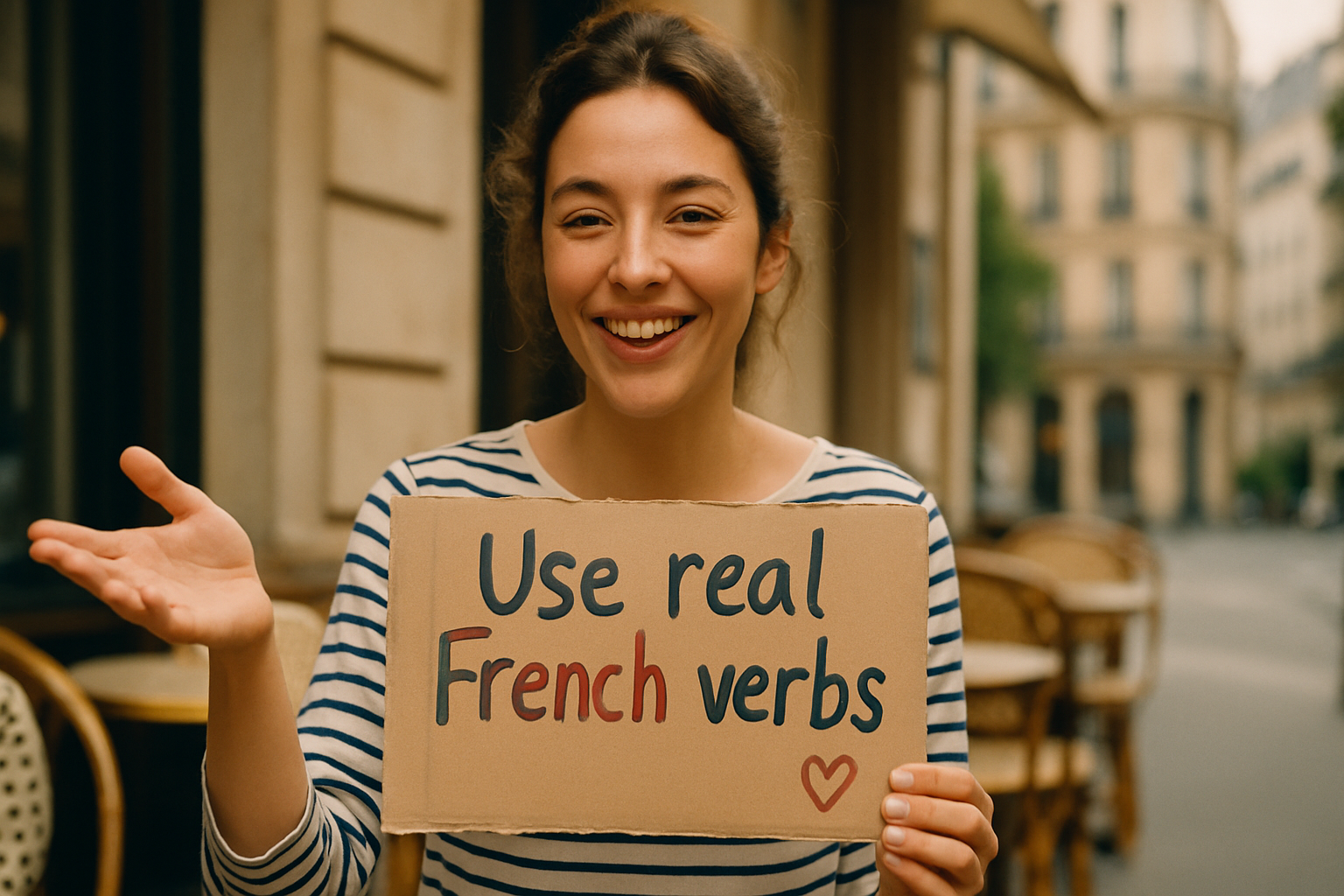
Learning a new language can be daunting, especially when it comes to mastering the verbs that form the backbone of everyday communication. In French, a handful of essential verbs will allow you to create meaningful sentences right from the start. This article focuses on the first 12 French verbs you should learn as an adult beginner. By understanding these verbs, you will unlock the ability to express basic thoughts and needs in French.
The Essential Verbs
Here are the 12 essential French verbs that every beginner should learn:
- Être (to be)
- Avoir (to have)
- Aller (to go)
- Vouloir (to want)
- Avoir besoin de (to need)
- Aimer (to like/love)
- Parler (to speak)
- Apprendre (to learn)
- Manger (to eat)
- Boire (to drink)
- Vivre (to live)
- Faire (to do/make)
These verbs are fundamental and versatile, allowing you to express a wide range of ideas. Let’s explore each of them in more detail.
1. Être (to be)
The verb être is crucial for describing identity, states, and characteristics. For example:
- Je suis étudiant. (I am a student.)
- Elle est contente. (She is happy.)
2. Avoir (to have)
Avoir is used to indicate possession and to form compound tenses. For instance:
- J’ai un livre. (I have a book.)
- Nous avons fini. (We have finished.)
3. Aller (to go)
Aller is essential for expressing movement and future actions. For example:
- Je vais au marché. (I am going to the market.)
- Ils vont voyager. (They are going to travel.)
4. Vouloir (to want)
The verb vouloir is key for expressing desires. For example:
- Je veux un café. (I want a coffee.)
- Elle veut apprendre le français. (She wants to learn French.)
5. Avoir besoin de (to need)
This phrase is used to express necessity. For instance:
- J’ai besoin de repos. (I need rest.)
- Nous avons besoin de plus d’informations. (We need more information.)
6. Aimer (to like/love)
Aimer is used to express likes and loves. For example:
- J’aime le chocolat. (I like chocolate.)
- Ils aiment la musique. (They love music.)
7. Parler (to speak)
This verb is essential for communication. For example:
- Je parle français. (I speak French.)
- Elle parle anglais. (She speaks English.)
8. Apprendre (to learn)
Apprendre is important for expressing the act of learning. For instance:
- Je veux apprendre le français. (I want to learn French.)
- Nous apprenons beaucoup. (We are learning a lot.)
9. Manger (to eat)
This verb is vital for discussing meals and food preferences. For example:
- Je mange une pomme. (I am eating an apple.)
- Ils mangent au restaurant. (They are eating at the restaurant.)
10. Boire (to drink)
Boire is used for beverages. For example:
- Je bois de l'eau. (I drink water.)
- Elle boit du vin. (She drinks wine.)
11. Vivre (to live)
This verb helps you describe where you reside. For instance:
- Je vis à Paris. (I live in Paris.)
- Ils vivent en France. (They live in France.)
12. Faire (to do/make)
Faire is used for a variety of actions. For example:
- Je fais mes devoirs. (I do my homework.)
- Nous faisons un gâteau. (We are making a cake.)
Common Mistakes
One common mistake beginners make is mixing up tu and vous when conjugating these verbs. Tu is informal and used with friends or family, while vous is formal or plural. For example:
- Tu es (You are - informal)
- Vous êtes (You are - formal/plural)
Practice using both forms to get comfortable with the differences.
How to Practice
To effectively practice these verbs, try the following:
- Create sentences: Use each verb in a sentence about your daily life. For example, "Je veux aller au cinéma" (I want to go to the cinema).
- Flashcards: Make flashcards with the verb on one side and its meaning on the other. Include example sentences to reinforce usage.
- Role-play: Practice speaking with a partner, using these verbs in various contexts.
By mastering these essential verbs, you’ll be well on your way to forming real sentences in French. At Lingden, we provide audio pronunciations and IPA transcriptions to help you practice these verbs correctly. Start speaking French today and unlock the world of communication!