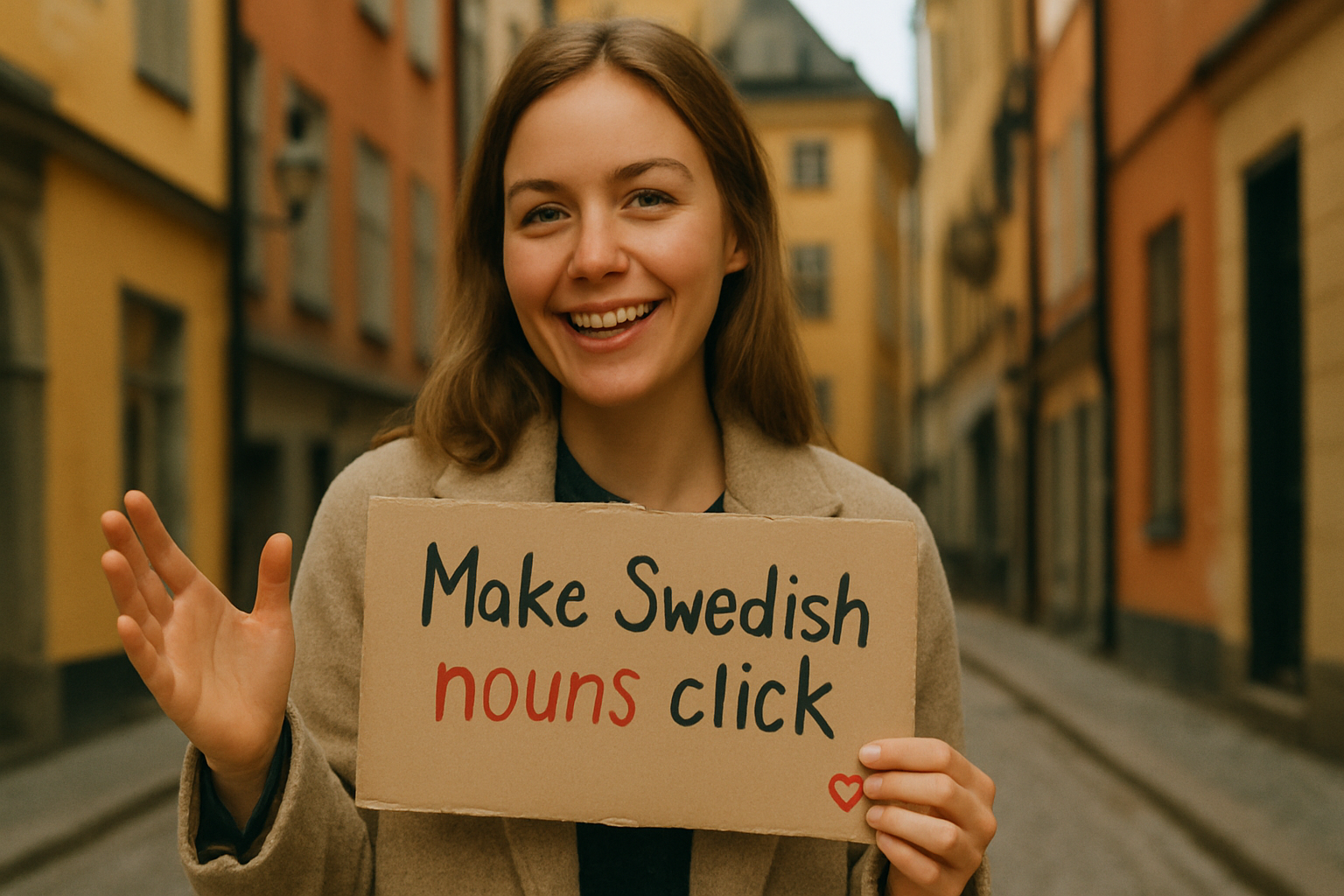
Swedish nouns might seem challenging at first, but with a few simple rules, you'll be on your way to mastering them. Understanding the noun system, including articles, gender, and plural forms, is essential for building your Swedish language skills. Let's dive into the basics of Swedish nouns and how to use them effectively.
Understanding Swedish Gender and Articles
In Swedish, nouns are classified into two genders: common and neuter. Each noun is accompanied by an indefinite article: en for common gender and ett for neuter. For example, en bil (a car) and ett hus (a house). The definite form is created by adding a suffix to the noun, such as bilen (the car) and huset (the house). This system of articles and suffixes is crucial for understanding and using Swedish nouns correctly.
Noun Starter Kit
Here's a list of useful Swedish nouns to kickstart your learning:
- en bok (a book)
- ett bord (a table)
- en stol (a chair)
- ett äpple (an apple)
- en katt (a cat)
- ett barn (a child)
- en hund (a dog)
- ett fönster (a window)
- en blomma (a flower)
- ett brev (a letter)
Noun Patterns
Swedish nouns follow certain patterns based on their gender:
- Common Gender (en-words): These nouns often refer to living beings or objects. For example, en flicka (a girl) and en hund (a dog).
- Neuter Gender (ett-words): These are often inanimate objects or abstract concepts. Examples include ett brev (a letter) and ett barn (a child).
Understanding these patterns will help you predict the gender of new nouns you encounter.
Plural and Definite Forms
Forming plurals in Swedish can vary, but here are some common patterns:
- Common Gender Plurals: Typically add -or or -ar. For example, en flicka becomes flickor (girls) and en blomma becomes blommor (flowers).
- Neuter Gender Plurals: Often add -n or remain unchanged. For example, ett äpple becomes äpplen (apples) and ett barn remains barn (children).
The definite form in plural is also created with suffixes:
- Common Gender Definite Plural: Add -na. For example, flickorna (the girls) and blommorna (the flowers).
- Neuter Gender Definite Plural: Add -en. For example, äpplena (the apples) and barnen (the children).
Common Mistake
A frequent mistake is confusing the gender of nouns. Remember, there is no universal rule for determining gender, so it's crucial to memorize the gender of each noun as you learn it. Practice by grouping nouns into common and neuter categories. Using flashcards or apps like Lingden can help reinforce these distinctions.
How to Practice
To solidify your understanding, try creating simple sentences using the nouns from your starter kit. Use Lingden to hear the correct pronunciation and practice with real sentences. For example, "En katt sitter på ett bord." (A cat is sitting on a table.) Another practice sentence could be "Ett barn leker med en hund." (A child plays with a dog.)
Conclusion
Mastering Swedish nouns involves understanding their gender, articles, and plural forms. With practice, you'll become more comfortable using them in everyday conversation. Use Lingden to access real sentences and audio to enhance your learning experience. By focusing on these foundational elements, you'll be well on your way to fluency in Swedish. Happy learning!